
Most organizations stop at satisfaction. The strongest keep climbing.
Why the best brands treat a single experience as the bottom of a ladder, not the finish line.
Ask most organizations how an experience went and they reach for one number: satisfaction. Did people have a good time? Would they recommend it? Check the box, bank the score, move on.
Satisfaction is worth measuring. It is also where most brands quietly stop. And that is the problem, because satisfaction is a ceiling, not a ladder.
The strongest organizations we work with treat a first experience differently. They treat it as the bottom of a climb. Every participant who shows up is standing at the base of something they could ascend, and the job of the business is to help them climb. The higher someone goes, the more valuable the relationship becomes, for them and for the organization.
We call it the Participation Framework. There are five stages.
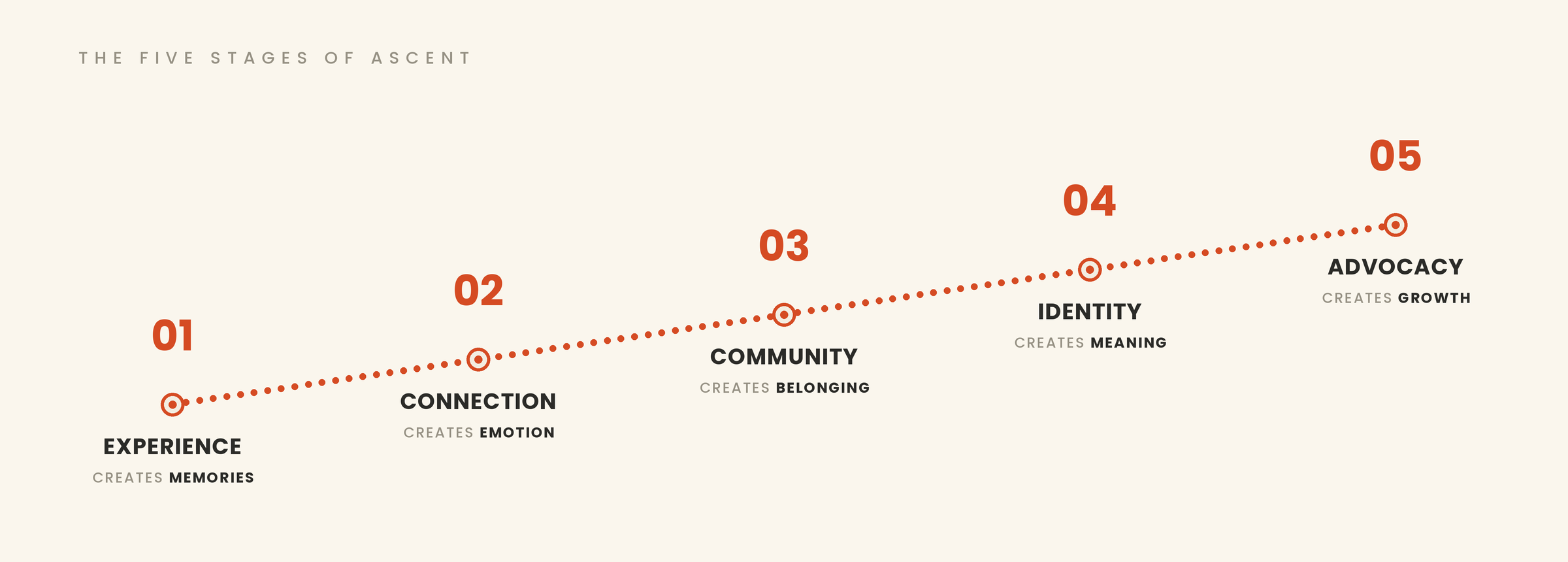
01. Experience
"I participated."
The first moment. Someone shows up, something happens, and they leave with a memory worth keeping. This is where most brands spend everything: the launch, the event, the big splash. It matters, but it is only the trailhead. What you design here is the experience itself, good enough to earn a second look. Experience creates memories, and acquisition.
02. Connection
"I felt connected."
Somewhere between the first visit and the second, emotion enters. A participant stops being a transaction and starts becoming a relationship. This is the rung most organizations skip, and it is exactly where retention leaks away. Connection is not built by a better product. It is built by people: small group moments, rituals, the person who remembered your name. Connection creates emotion, and retention.
03. Community
"These are my people."
There is a moment when a participant stops coming back for the experience and starts coming back for the people. That is the shift from customer to community, from a visit to a sense of belonging. It is also where network effects switch on, because members bring members and growth begins to compound rather than simply add. Community creates belonging, and repeat participation.
04. Identity
"This is who I am."
The most powerful thing that can happen to a brand is when "I do this" becomes "I am this." When participation turns into identity, behavior turns durable. Price sensitivity drops, competitors stop mattering, and you no longer have to re-earn the relationship every cycle. What you design here are symbols, milestones, progression, and the stories people tell about themselves. Identity creates meaning, and lifetime value.
05. Advocacy
"I bring others."
At the top of the climb, participants become co-owners of the mission. They refer, they mentor, they show up as ambassadors, partners, and donors. They grow the thing for you, because it is now theirs too. This is the organic, word of mouth, referral driven growth that no ad budget can manufacture. It is also the rung most companies dream about and few design for. Advocacy creates growth, and organic reach.
The strategic leap
Here is the pattern. Most organizations run a short path: Experience, then Satisfaction, then start over.
The strongest run a longer one: Experience, Connection, Community, Identity, Advocacy.
The difference is not a better single experience. It is the decision to design the whole climb.
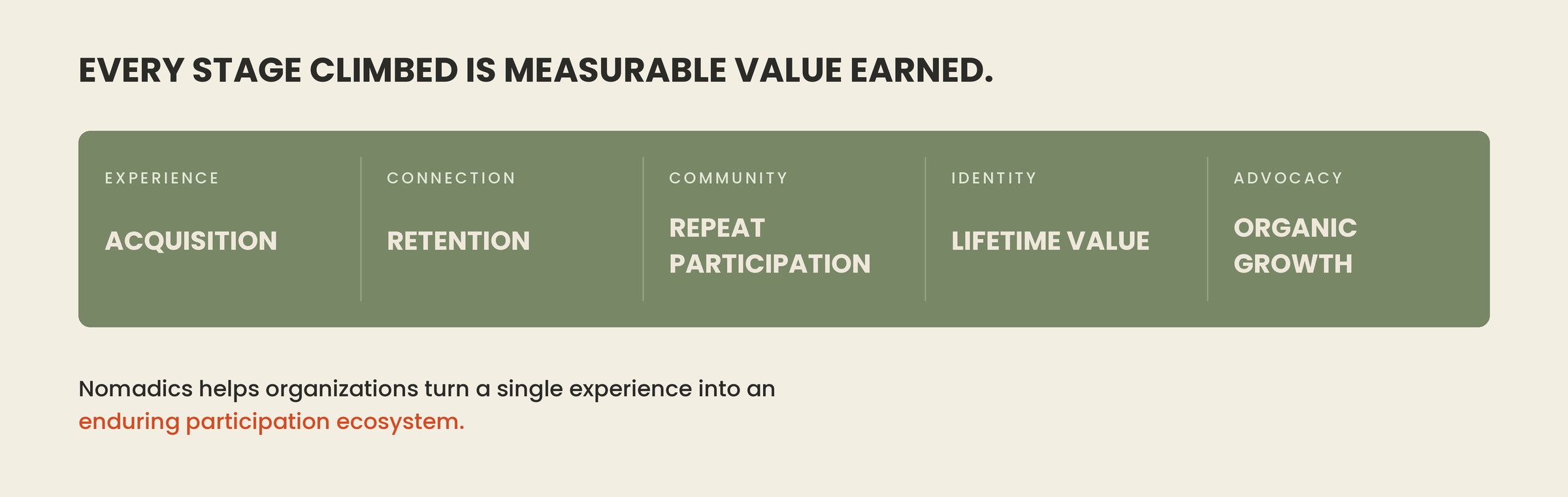
Acquisition at the bottom. Retention and repeat participation in the middle. Lifetime value and organic growth at the top. When you map your participants to the ladder, you stop guessing where to invest and start seeing exactly which rung is leaking and which one is ready to compound.
Where to start
You do not fix all five stages at once. You find the rung where value is leaking, and you design the climb from there. Sometimes that means turning a great one-time event into a reason to return. Sometimes it means turning a loyal customer base into a community that markets for you.
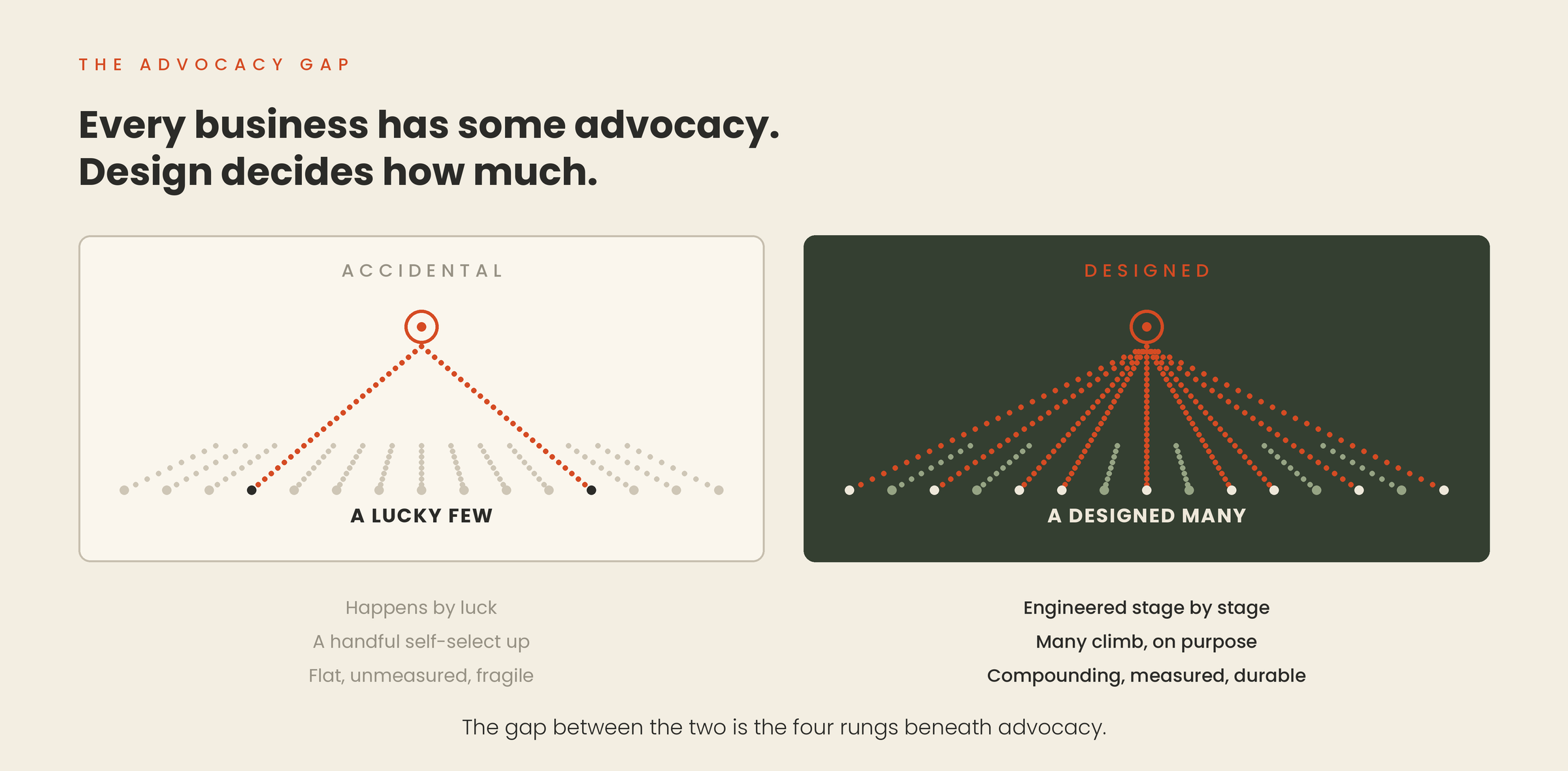
That is the work we do at Nomadics. We help organizations turn a single experience into an enduring participation ecosystem.
